Automations
Routine work moves. Your judgment stays visible.
Build the follow-up you keep doing by hand as a workflow you can read: a trigger, the steps between, and the action at the end. Nothing runs where you cannot see it.

A workflow you can read
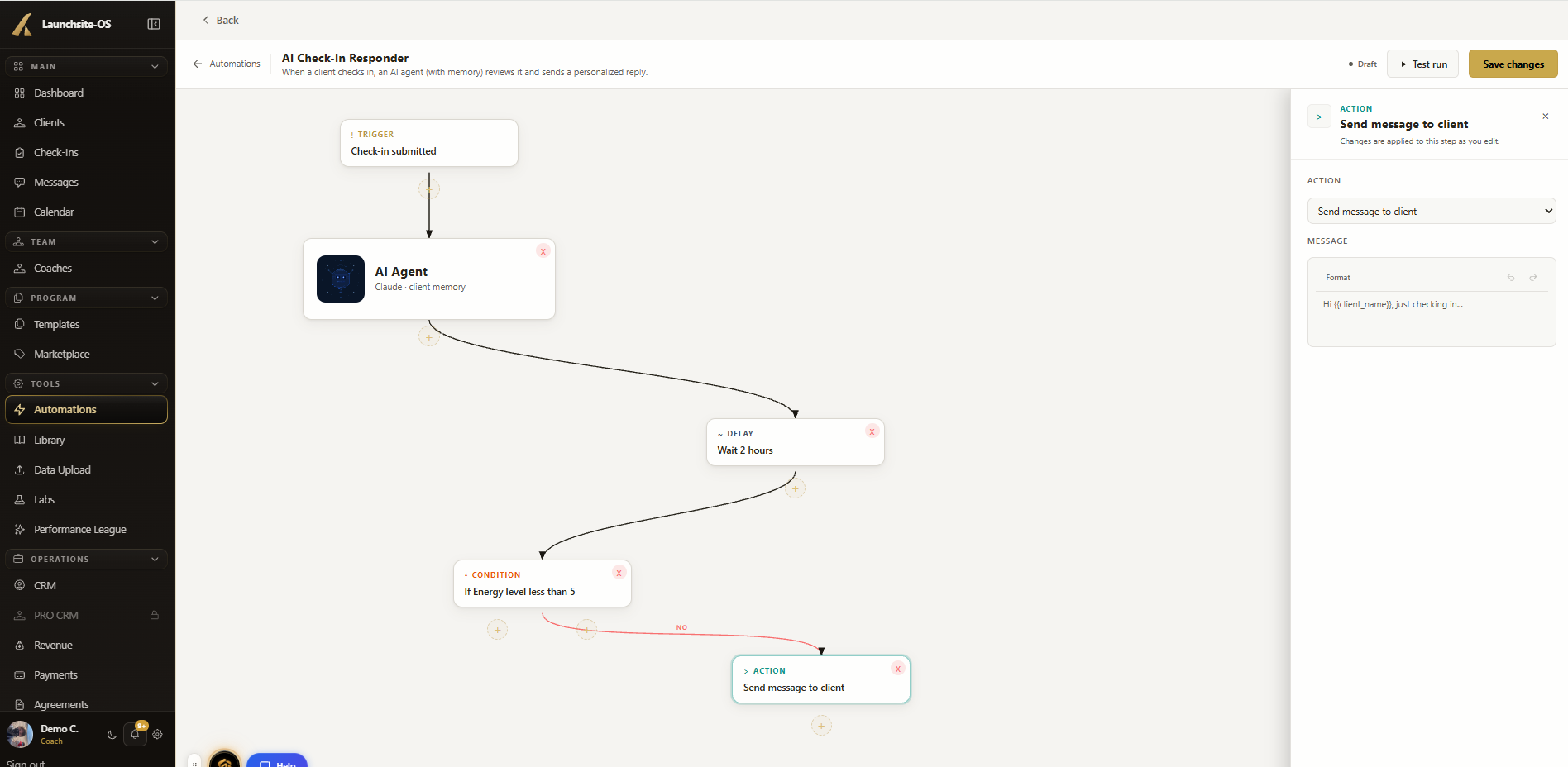
Every step on the canvas,in the order it runs.
The branch that fires when energy drops below five is drawn where you can see it. Select any step to edit exactly what it does, without leaving the diagram.

The pieces
Triggers, delays, conditions, actions.
Real practice events start the workflow: a check-in lands, a phase advances, a client goes quiet. What happens next is yours to arrange.
- 01Triggers fire from events that actually happened
- 02Delays wait in real time, not on your calendar
- 03Conditions branch on the client’s own data
- 04Actions message, assign, or flag for your review

Approval gate
Nothing reaches a client without you.
Drafted messages queue for review instead of sending themselves. You approve, edit, or reject, and the workflow continues from your decision rather than around it.
- 01Drafts wait in a review queue you control
- 02Edit before approving, or reject outright
- 03The workflow resumes only once you have acted

How automation behaves here
Assistive by design.Never autonomous.
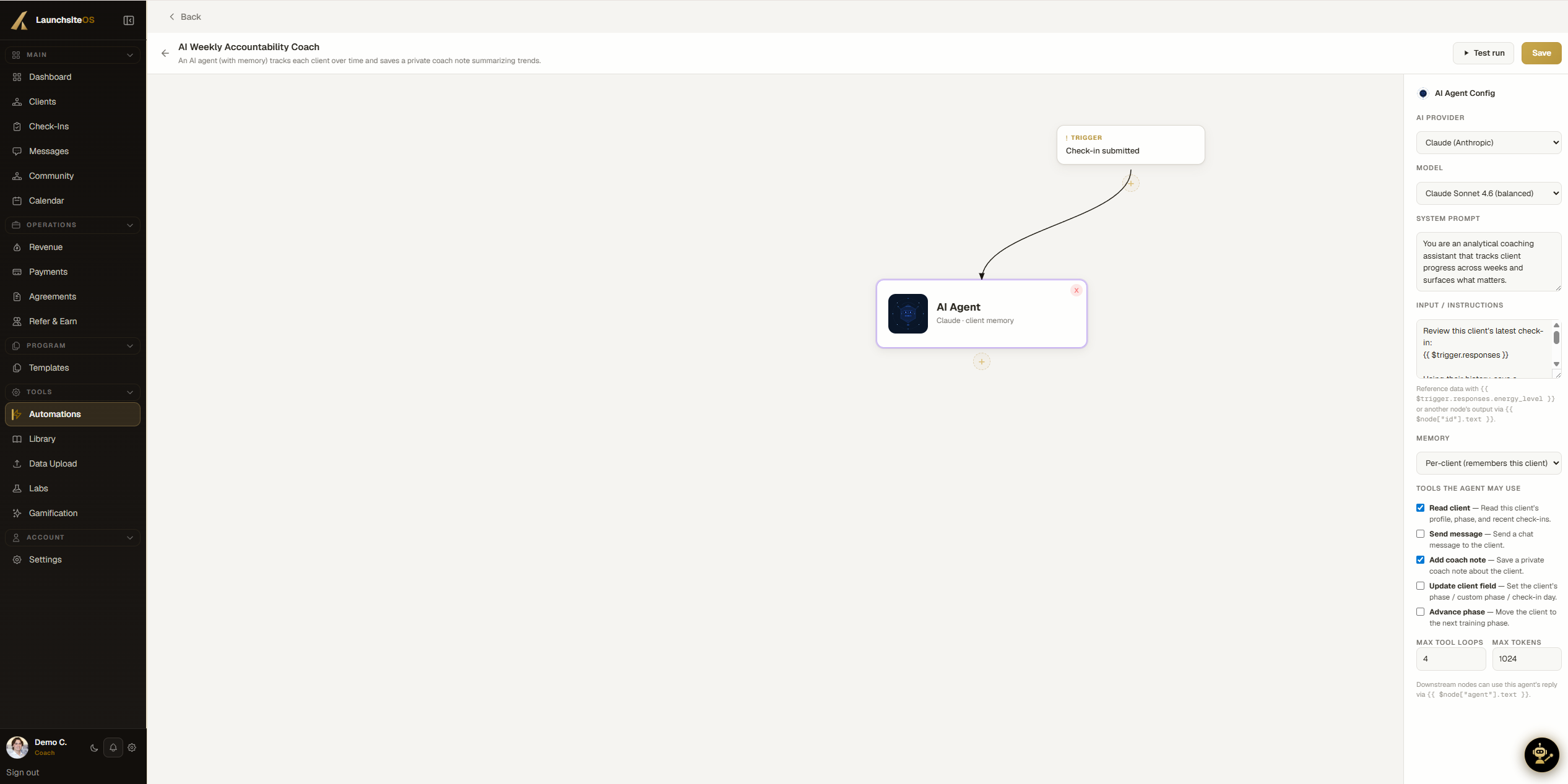
Automation can propose, summarize, and carry out an instruction you gave it. It does not make coaching decisions on your behalf.
- 01Every workflow is readable as a diagram before it runs
- 02State-changing steps run from an explicit coach instruction
- 03Drafted client messages queue for approval by default
- 04Runs keep durable history, so you can explain what happened
- 05Any workflow can be paused or edited without losing its history
Explore the platform
The rest of the practice.
Automations are one system of six. They share the same client record.
Your practice, operating clearly
Automate the follow-up you forget when the week gets busy.
Start with one workflow and watch what it catches.